




.png)

Cliff Railways - West Hill
Hastings
Type:Railway
West Hill, George Street, Hastings, East Sussex, TN34 3EA

Hastings
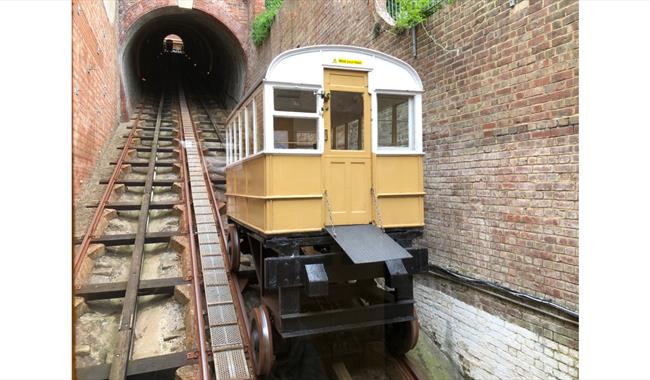
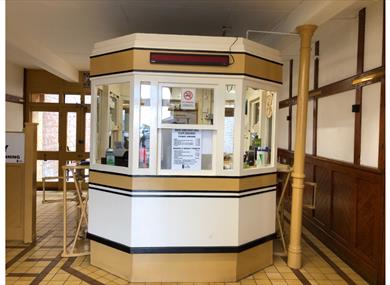
The West Hill Lift retains its original wooden Victorian coaches, and also runs through a tunnel, very unusual for a funicular.
The lift's charming lower station is in traffic-free George Street which is full of continental-style cafés, art shops and bookshops.
The West Hill itself offers some of the town's most remarkable views, stretching round to Beachy Head in the west and out across the Channel, the busiest sea lane on the world. Better still, you can enjoy these sights from inside the West Hill Café which is open throughout the Summer and offers a wide range of drinks and meals.
Visit Hastings Castle by taking a trip on the West Hill Cliff Railway and parking in one of the seafront car parks. The railway travels at a gradient of 33%, construction of the line began back in 1889, finally opening in 1891.
The East and West Hill Cliff Railways have become an enduring symbol of the unique charm and character of Hastings, a symbol powerful and true enough to withstand two world wars and the fast-changing tides of a turbulent century.
Please note that there is limited access on the West Hill carriages for large prams and push chairs.
Currently the lifts are only accepting payment by card.
All tickets include return journeys.
Ticket are available for tours and school groups. Minimum group size is 10 people.
Weekly and seasonal tickets are available.
 WTTC Safe Travels 2021
Hastings Adventure Golf is the UK home of Miniature Golf and features no less than 3,…
Images and views of the remains of Norman Castle built after William the Conqueror's…
Hastings' main beach backs right onto the seafront of this established seaside resort…
These acres of caverns conceal Hastings' exhilarating history of smugglers, bootleggers…
The Jerwood Gallery is now closed. On 6 July 2019 it relaunches as Hastings Contemporary.…
A former fishermen's church by the old net shops, now a museum on local fishing with ship…
The Shipwreck Museum, situated in the historic Old Town of Hastings, contains a truly…
Display of marine life with hundreds of marine creatures including sharks, rays, crabs…
A 10 minute walk from Hastings town centre, this Grade II Listed Victorian park is one of…
Hastings White Rock is home to some of the best live entertainment in East Sussex. It’s…
Visit Hastings’ family-friendly and diverse Museum and Art Gallery for an exploration of…
A fabulous nature reserve with stunning coastal scenery situated within the High Weald…
Bexhill's traditional seafront is punctuated by some fantastic pieces of modernist…
Spectacular modernist Grade 1 listed Pavilion on the promenade in Bexhill, hosting…

© Visit South East England 2026. All Rights Reserved