



.png)

Polegate
Wealden
Type:Town
Church Road, Polegate, East Sussex, BN26 5BX

Wealden
Polegate lies on the Roman road which runs from Pevensey Castle (Anderida) to Lewes.
To the north of the village lay Otham Priory which was built in 1175, and was closed in the 1200's when the monks moved to settle Bayham Abbey between Lamberhurst and Bells Yew Green. The remains of the abbey can be seen from the Cuckoo Trail. Otham was founded by Ralph de Dene (from West Dean near Seaford ), of the Premonstratensian Order who was a sub tenant of Pevensey Castle . The monks moved to Bayham Abbey because 'Otham was impossibly damp and inhospitable', as it lay in the Pevensey Marshes.
In 1817 the Polegate Windmill was built, replacing an old post mill on the South Downs. The mill is a tower type, which is now open to the public in the summer thanks to volunteers. The windmill can now be found in the middle of a housing estate, which has built up in the 20th century.
The Cuckoo Line (Steam Railway) track was started in 1849 with the single track link from Polegate to Hailsham . In September 1880 a further length of single track line from Eridge to Hailsham was opened, providing a service from Charing Cross to Eastbourne via Tunbridge Wells . Polegate became one of the main centres of rail travel, with its sidings for the Cuckoo Line , and its station on the main Hastings Eastbourne Lewes line.
The village is now a starting point for the Cuckoo Trail , a walk owned by the County Council, which meanders through the East Sussex countryside to Heathfield.
Polegate village is a fairly modern settlement built around the railway lines, the town of Eastbourne has grown significantly since the 1850's and now has absorbed Polegate a suburb .
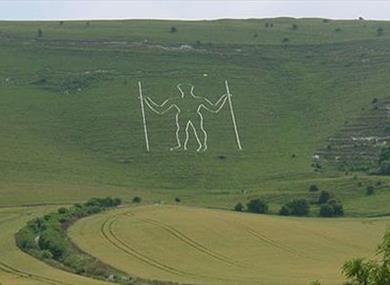
The Long Man of Wilmington is a hill figure on the steep slopes of Windover Hill near Polegate. Make a stop at the beautiful Bates Green Garden in Arlington just 10 minutes drive from Polegate, a great horticultural hot spot and a real hidden gem.
The Cuckoo Trail is 11 miles long joining three of the district’s towns, Heathfield,…
See how the Long Man of Wilmington is a striking image on the Sussex hillside. Europe’s…
Enjoy vistas of bluebells in 23 acres of ancient woodland. Walks and trails through three…
The naturalistic garden is spread over a 7-acre site, comprising of 1.5 acres of…
Make WILD memories and enjoy a great family day out at the award-winning Drusillas Park.…
The English Wine Centre has a selection of more than 140 English wines available in our…
Enter through the 14th-century gatehouse and wander the beautiful gardens or tour the…
Exciting family rides
Amazing indoor & outdoor play
Zoo, Daily Owl Displays & much more!
Hailsham Pavilion combines a fully restored interior featuring high quality decor…
Travel behind the 1/8th scale miniature steam or diesel locomotive for nearly a mile…
A compact garden with a pond that is the source of the Bourne Stream from which…
Towner, the contemporary art museum, is Eastbourne's new art gallery and centre for the…
Situated in the Sussex Downs Area of Outstanding Natural Beauty (AONB), the Seven Sisters…
Swashbuckling adventure at Treasure Island theme park. Soft Play, Mini Golf, Play Park…
At the heart of the park lies a large artificial lake, frequently used by two resident…

© Visit South East England 2026. All Rights Reserved